
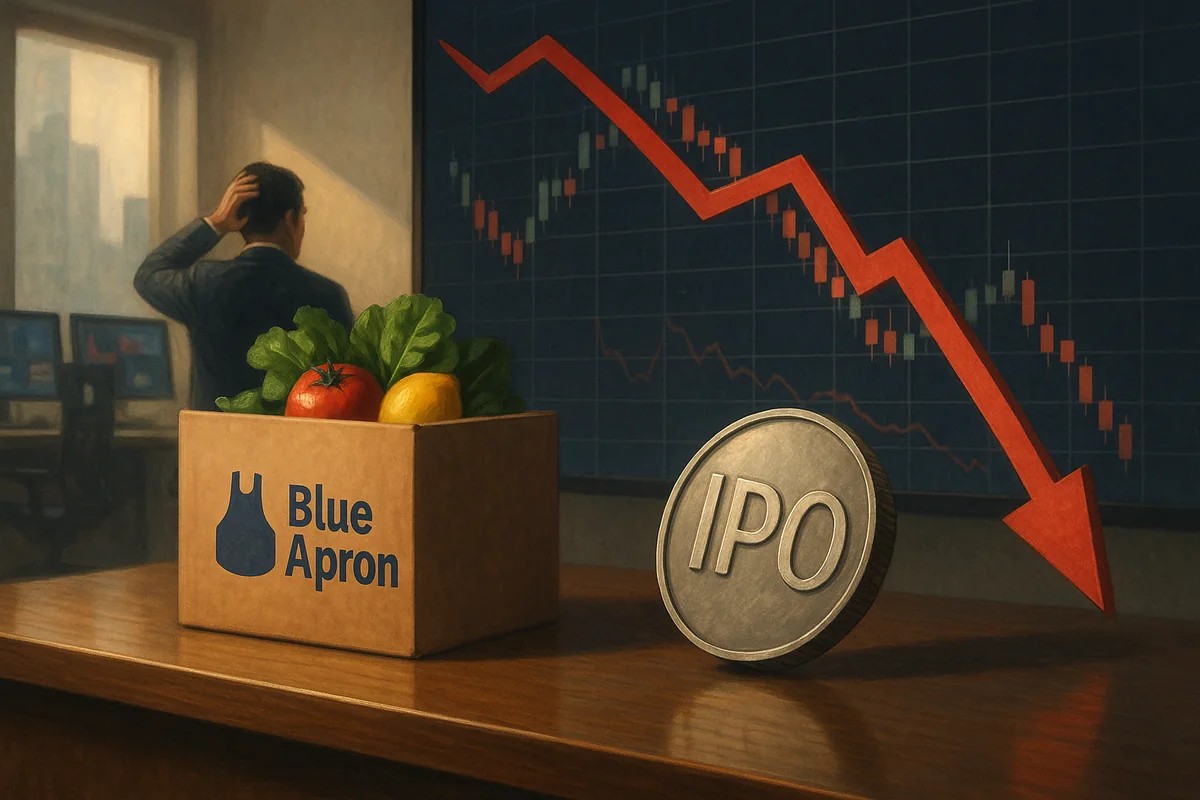
TL;DR: Blue Apron’s initial public offering in 2017 was marked by a steep decline in market value, reflecting the company’s struggles to handle rising competition and logistical challenges. This case highlights the critical need for businesses to remain adaptable in competitive markets to sustain growth.
In June 2017, meal-kit service provider Blue Apron embarked on what many anticipated to be a successful initial public offering (IPO). However, the hopes quickly dimmed as the company’s market value dropped significantly shortly after its debut. Initially valued at close to $2 billion, the stock price struggled as the company faced logistical challenges and increased competition, notably from Amazon’s acquisition of Whole Foods at the same time.
The Initial Offering and Initial Challenges
Blue Apron went public in June 2017 with an initial offering price of $10 per share, valuing the company at nearly $2 billion. Optimism surrounded the IPO due to Blue Apron’s rapid growth, having increased revenue from $78 million in 2014 to $795 million in 2016. With such robust figures, investors had high expectations for the company’s future performance. However, the stock price quickly suffered, reaching under $1 later as evidenced by various reports. This drop highlighted both internal management issues and the growing pressures from external forces, notably Amazon entering the meal-kit arena by purchasing Whole Foods and expanding its grocery footprint (Reuters).
Pivotal Decisions and Failures
Several strategic decisions contributed to the decline in Blue Apron’s market value. The company had to grapple with operational difficulties, including problems in scaling its supply chain effectively to meet consumer demand, alongside branding and marketing blunders. Analysts pointed toward an over-ambitious expansion strategy that failed to align with the realities of infrastructure and industry competition. Studies reflected that misjudging the evolving industry climate, especially with Amazon aggressively biting into the market, played a significant role in Blue Apron’s downfall (Bloomberg).
Consequences and Accountability
The fallout from the ambitious IPO was stark. By December 2018, the shares had plummeted to under $1 apiece, leading to investigations and reassessments of Blue Apron’s business model. The company’s missteps were soon under scrutiny, with investors questioning the transparency and preparedness of Blue Apron’s leadership. Accountability mechanisms unfolded through regulatory bodies, scrutinizing the trajectory and missteps of the IPO (Food Dive).
Industry Context and Competitive Forces
The meal-kit industry is inherently dynamic and susceptible to shifts due to new entrants and consumer trends. In Blue Apron’s case, the timing of its IPO could not have been more challenging; the competitive landscape was dramatically affected by Amazon’s acquisition of Whole Foods, a move that put tremendous pressure on grocery and meal-kit stocks alike. Blue Apron’s struggle elucidated the intense volatility of markets disrupted by technological advancements and shifting consumer preferences.
Lessons for Businesses in Competitive Markets
- Adaptability: Businesses must continually assess and adapt to the environment, mitigating risks from industry giants such as Amazon.
- Scalability: Ensure logistical and operational frameworks can support rapid growth and consumer demand efficiently.
- Strategic Vision: Align business expansion strategies realistically with resource capabilities and market conditions.
- Market Awareness: Stay vigilant about competitive pressures and evolving industry dynamics.
Frequently Asked Questions
What were the major factors leading to Blue Apron’s IPO decline? The decline was driven by a combination of internal inefficiencies in logistics, over-ambitious business strategies, and fierce competition from industry giants like Amazon.
How did industry competition impact Blue Apron’s market performance? The acquisition of Whole Foods by Amazon significantly influenced market dynamics, resulting in heightened competition that pressured Blue Apron’s stock value as consumer trust in traditional and combined grocery solutions increased.
Source note: This article is based on public records and thorough online reports, including financial market analyses and company filings from authoritative sources such as SEC and related industry insights.