
TL;DR: In 1996, Marvel Entertainment filed for Chapter 11 bankruptcy after years of licensing its characters to other studios for modest fees. The company’s turnaround began when it shifted from selling rights to producing films itself, using its own characters as collateral—a risky move that transformed Marvel into one of the most valuable entertainment franchises in history and demonstrated how controlling core assets can unlock entirely new business models.
When Marvel Entertainment Group filed for Chapter 11 bankruptcy on December 27, 1996, the company that had created Spider-Man, the X-Men, and the Avengers owed hundreds of millions of dollars. The comic book publisher had survived the Great Depression and countless industry downturns, but a toxic combination of speculative overprinting, market oversaturation, and dependence on licensing revenue had brought it to the brink of collapse.
What Went Wrong: The Licensing Trap and Speculative Excess
Marvel’s troubles began in the early 1990s when the comic book industry experienced an artificial boom driven by collectors buying multiple copies of the same issue, hoping for future value. Marvel responded by flooding the market with variant covers, crossover events, and new titles. By 1995, Marvel Entertainment Group was heavily in debt, and a year later it formally entered bankruptcy proceedings.
The company’s business model compounded the problem. For decades, Marvel had licensed its most valuable characters to film studios for relatively small upfront payments and modest royalty percentages. Other studios controlled the creative direction, distribution, and the majority of profits. Sony held Spider-Man rights, Fox controlled the X-Men and Fantastic Four, and Marvel collected licensing fees while watching others build billion-dollar franchises from its intellectual property. When comic sales collapsed, Marvel had no alternative revenue engine powerful enough to service its debt.
Creditor battles further destabilized the company. Investor Carl Icahn bought Marvel’s distressed bonds and briefly seized the chairmanship, betting he could control the company through its debt. He lost. The bankruptcy court ultimately restructured ownership, and toy executive Ike Perlmutter and his partner Avi Arad gained control of the reorganized company. Marvel emerged from bankruptcy in 1998, but its path forward remained uncertain.
The Pivot: From Licensing to Self-Production
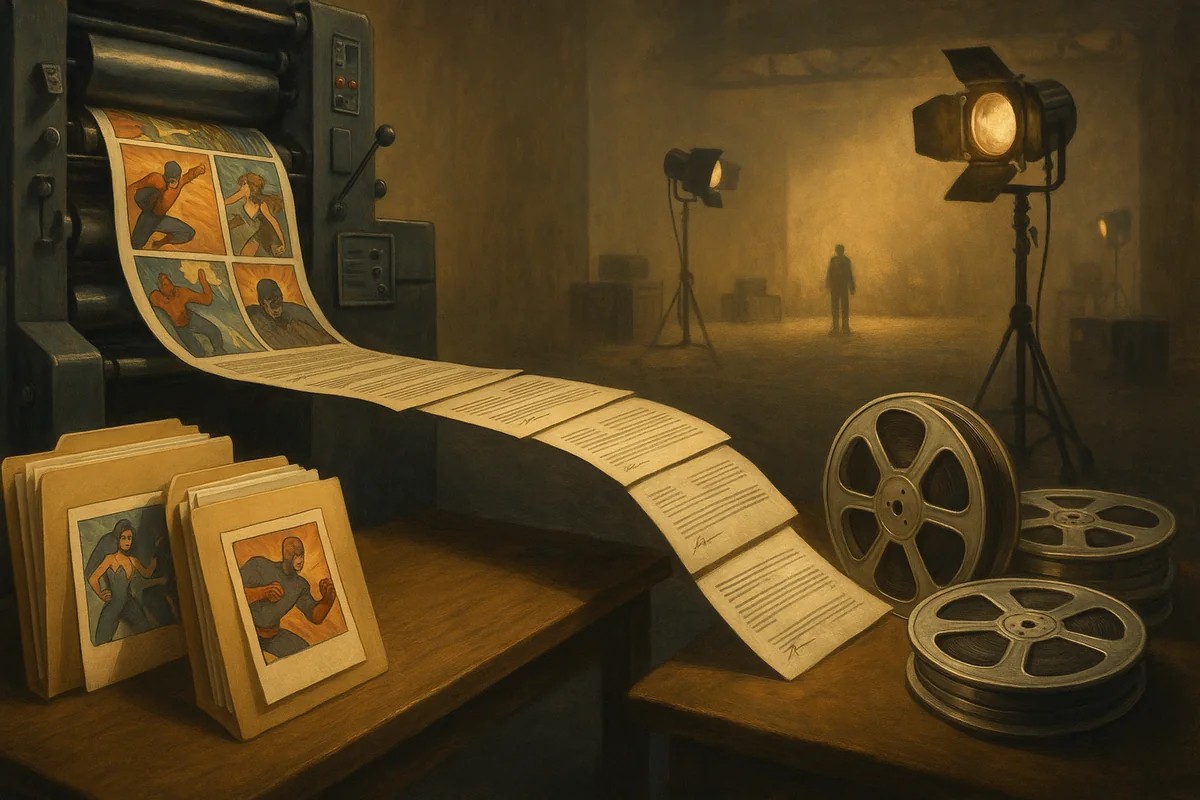
The turning point came when Marvel’s new leadership decided to stop merely licensing characters and start producing films themselves. This was not a confident bet; it was a last resort. Marvel was essentially offering up the jewels of its business—characters like Thor and Captain America—as collateral to secure financing for its own film slate. If the movies failed, the company would lose the rights to its most iconic heroes.
In 2005, Marvel Studios secured a $525 million credit facility from Merrill Lynch, backed by the film rights to ten characters the company still controlled. Marvel hired producer Kevin Feige to oversee a connected film universe, beginning with characters that other studios had passed over. Iron Man, released in 2008, became a surprise hit, earning over $585 million worldwide and proving that Marvel could succeed without Spider-Man or the X-Men leading the charge.
The success of Iron Man validated the self-production model. Marvel retained creative control, captured the majority of box-office revenue, and built a shared cinematic universe that encouraged audiences to see every release. By 2009, Disney recognized the franchise’s potential and acquired Marvel Entertainment for $4 billion. Fifteen years after near-collapse, Marvel had transformed from a distressed comic publisher into one of the highest-grossing film franchises in history.
Why This Strategy Succeeded
Marvel’s turnaround illustrates several transferable principles. First, the company stopped viewing its characters as commodities to lease and began treating them as core assets to develop. This shift required accepting short-term financial risk—pledging valuable intellectual property as loan collateral—in exchange for long-term control and revenue potential.
Second, Marvel built a business model designed for repeatable success. Rather than producing standalone films, the studio created a shared universe where each movie promoted the next. This approach reduced marketing costs per film and created compounding audience investment. Viewers who enjoyed Iron Man had reason to watch Thor; fans of both had reason to see The Avengers.
Third, Marvel leveraged scarcity strategically. Because the company had already licensed its most popular characters, it was forced to prove that second-tier heroes could anchor blockbuster films. This constraint drove creative risk-taking and demonstrated that strong storytelling and consistent quality mattered more than name recognition alone.
Warning Signs and Lessons for Asset-Dependent Businesses
Marvel’s near-collapse offers clear warnings for companies that depend on intellectual property, brands, or other core assets:
- Licensing income feels safe but limits upside: Royalty checks provide steady cash flow but transfer most profit and all creative control to partners. If your core asset has significant untapped value, licensing may be leaving money on the table.
- Market oversaturation destroys long-term value: Marvel flooded the comic market with variant covers and crossover events to meet short-term sales targets, eroding consumer trust and collapsing demand. Sustainable growth requires discipline.
- Debt battles during distress are expensive: Creditor infighting and legal fees consumed time and resources that could have been directed toward recovery. Companies in crisis benefit from clear restructuring plans and aligned stakeholder incentives.
- Core-asset control enables pivots: Marvel’s turnaround depended on retaining enough character rights to build a film slate. Companies that sell or lease their most valuable assets lose the option to change business models later.
The Broader Context: Risk and Reward in Vertical Integration
Marvel’s self-production strategy was not a sure bet. Many entertainment companies have tried to vertically integrate and failed, discovering that controlling production, distribution, and merchandising requires different skills and capital than licensing alone. Marvel succeeded in part because it had experienced operators like Feige who understood both storytelling and franchise management, and because the broader film industry was shifting toward tent-pole franchises that rewarded long-term planning.
The strategy also required patience. Marvel could not immediately reclaim Spider-Man or the X-Men; those rights remained with Sony and Fox under contracts signed before bankruptcy. Instead, the company worked with the characters it controlled and waited for opportunities to renegotiate or reacquire others. Disney’s 2009 acquisition and its subsequent purchase of 21st Century Fox in 2019 eventually reunited most of Marvel’s characters under one corporate umbrella, but the initial turnaround happened without that guarantee.
Frequently Asked Questions
Why did Marvel file for bankruptcy if it owned valuable characters? Marvel’s bankruptcy in 1996 resulted from comic book market oversaturation, speculative bubble collapse, and dependence on licensing income that generated modest fees while others captured most film profits. The company had debt obligations it could not service when comic sales plummeted, and its business model did not allow it to benefit fully from its characters’ cinematic potential. The bankruptcy forced a restructuring that eventually enabled new ownership to pivot toward self-production.
How risky was Marvel’s decision to produce its own films? Extremely risky. Marvel pledged the film rights to ten characters as collateral for its production financing. If the initial films had failed, the company would have lost control of Thor, Captain America, and other heroes permanently. The decision reflected necessity as much as confidence; Marvel had already licensed its most popular characters and needed a new revenue model to survive.
Source note: This article is based on public records, bankruptcy filings, and reporting from the BBC, Den of Geek, and other outlets covering Marvel’s restructuring and subsequent film-production strategy. It reflects the documented history of a completed corporate turnaround.