
TL;DR: In 2016, Herbalife paid the FTC $200 million and rebuilt its pay model.
Regulators confirmed the harm, yet the stock outlasted its most famous short seller.
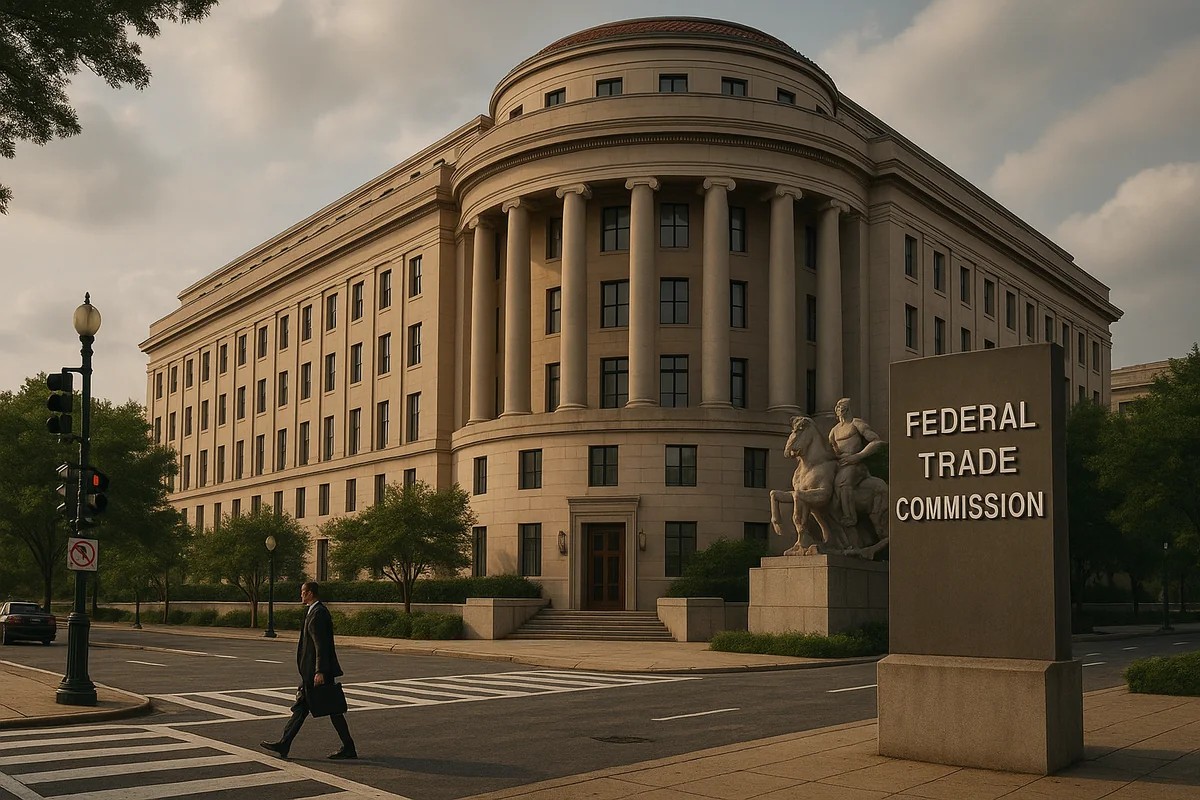
On July 15, 2016, the Federal Trade Commission announced that Herbalife would pay $200 million for consumer redress and fundamentally restructure how it compensates its distributors. FTC Chairwoman Edith Ramirez said the company had spent years, in her words at the announcement, “deceiving hundreds of thousands of hopeful people who saw Herbalife’s promotional campaigns.” It was one of the largest orders ever imposed on a multi-level marketing company, and it landed in the middle of the loudest activist-investor fight Wall Street had seen in decades: Bill Ackman’s billion-dollar short against Carl Icahn’s long. The case is best read as a ledger of claims set against the records that tested them. Some claims collapsed. Others, awkwardly, survived.
The Income Claim Versus the Earnings Record
Herbalife’s core pitch was a business opportunity: sell nutrition shakes and supplements, build a downline, and earn anything from side income to a full-time living. The FTC’s complaint put a documentary record against that claim. According to the agency’s July 2016 announcement, the overwhelming majority of Herbalife distributors made little or no money, and a substantial number lost money. The complaint alleged that more than half of the company’s “sales leaders” received under $300 in reward payments in a recent year, and that in a survey of Nutrition Club owners, roughly half reported making no profit or losing money outright. Ramirez’s summary was blunt: the settlement would require Herbalife to restructure its business “so that participants are rewarded for what they sell, not how many people they recruit.” The claim was wealth; the record was, for most participants, a rounding error or a loss.
“Retail Customers” Versus Rewards for Recruiting
Herbalife had long insisted it was a retail business whose products were bought by genuine end consumers. The FTC’s complaint tested that claim against the mechanics of the compensation plan and found a different engine underneath. Rewards, the agency alleged, were driven primarily by recruiting new distributors and by the wholesale purchases those recruits made, not by documented sales to people outside the network. Distributors were incentivized to buy product to qualify for bonuses and advance in the marketing plan, a pattern regulators and critics call inventory loading. Notably, the FTC framed this as an unfair compensation structure causing substantial economic injury rather than as retail success. The gap between the retail claim and the recruiting record is precisely what the consent order was engineered to close.
Ackman’s Certain Zero Versus Icahn’s Dial-In
The FTC was not the first to put the retail claim on trial. On December 20, 2012, Pershing Square’s Bill Ackman unveiled a roughly $1 billion short position and a marathon presentation arguing that Herbalife was a pyramid scheme whose stock was ultimately headed to zero. The bet ignited a proxy war among billionaires, and its defining moment came in January 2013, when Carl Icahn called into CNBC while Ackman was on air. As CNBC’s own retrospective of the feud recounts, Icahn called Ackman a liar, said he “wouldn’t invest with you if you were the last man on Earth,” and, after Ackman questioned whether Icahn was a “handshake guy,” delivered the line that outlived the trade: “if you want a friend, get a dog.” Within weeks, Icahn disclosed a substantial long position in Herbalife, converting a research dispute into a public market brawl in which the share price itself became the scoreboard.
What the Consent Order Actually Rewired
When the settlement arrived three and a half years after Ackman’s presentation, it did something more surgical than a fine: it rewrote the company’s incentive structure by court order. The stipulated order’s key operating terms included the following:
- $200 million paid to the FTC for consumer redress.
- At least two-thirds of distributor rewards must be based on retail sales of product that are tracked and verified, with receipts and purchaser information.
- Full compensation is available only if at least 80% of Herbalife’s product sales are made to legitimate end users; otherwise, rewards to distributors must be reduced.
- An independent compliance auditor monitors the company’s adherence for seven years, with the FTC empowered to act on violations.
- Curbs on misleading income claims and on requiring purchases to qualify for the business opportunity.
In effect, the order forced Herbalife to generate the retail evidence it had always claimed existed. If genuine customers were really there, verified receipts would prove it; if they were not, distributor pay would shrink automatically.
The Label the FTC Withheld
Here the record complicates Ackman’s claim rather than the company’s. For all its severity, the FTC never called Herbalife a pyramid scheme. The complaint charged unfair and deceptive practices; the word “pyramid” does not appear. Herbalife immediately cast this as vindication, and Ramirez pushed back in real time. In the agency’s press conference transcript, she acknowledged that “the word pyramid does not appear in our complaint,” while flatly declining to endorse Herbalife’s claim that it had been cleared: “I do not endorse that statement. No.” The regulator had validated much of the short seller’s diagnosis — deceptive income claims, recruitment-driven rewards, mass distributor losses — but stopped short of the terminal label on which his “certain zero” thesis depended. That gap between diagnosis and label turned out to be worth billions.
350,000 Checks, One Exit, and a Stock at Highs
The redress record arrived quickly. In January 2017, the FTC mailed checks to nearly 350,000 people who had run Herbalife businesses in the United States between 2009 and 2015, paid the company at least $1,000, and gotten little or nothing back. Most checks ranged from about $100 to $500; some exceeded $9,000. The trading record ran the other way. Herbalife absorbed the settlement, adjusted its model, and kept operating. In February 2018, Ackman finally unwound his position after more than five years; on the news, Herbalife shares jumped roughly 9% to what was then an all-time high. Icahn, by contrast, reportedly walked away with a profit on the order of $1 billion. The man whose research anticipated the government’s complaint lost the trade; the man who bet on the company’s survival won it.
The China Coda: Compliance Is Never Finished
The post-settlement claim — that a restructured, audited Herbalife was now a clean company — met its own test four years later, from a different direction. In August 2020, Herbalife agreed to pay roughly $123 million in total to resolve U.S. foreign-bribery investigations: about $67 million to the Securities and Exchange Commission in disgorgement and interest, and more than $55 million in criminal penalties under a deferred prosecution agreement with the Department of Justice. Prosecutors described a scheme running from roughly 2007 to 2016 in which Herbalife’s Chinese subsidiaries provided payments, meals, and gifts to government officials to obtain direct-selling licenses, blunt regulatory investigations, and suppress negative coverage in state-controlled media, with the outlays falsely booked as legitimate business expenses. The conduct predated and overlapped the FTC case, and it involved bribery rather than distributor economics. But the timing carried its own lesson: the seven-year FTC auditor was still on the job when the company signed its second nine-figure federal resolution. A consent order can rewire one incentive system; it cannot certify an enterprise.
The Herbalife case supports a conclusion that few enforcement stories can: a company can be simultaneously culpable enough to owe $200 million for deceiving its own sales force and durable enough to outlast, and financially break, its most famous accuser. Regulatory truth and trading truth run on different clocks. The FTC needed evidence that income claims were deceptive and that rewards tracked recruitment; it got both, and restructured the company. Ackman needed something narrower and harder: a share-price collapse before the cost of holding a billion-dollar short consumed the thesis. Herbalife delivered the first outcome without ever delivering the second. For anyone tempted to treat an enforcement action as a trading signal — or a surviving stock price as an exoneration — this settlement is the standing counterexample. The record can vindicate a claim and still bankrupt the person who made it first.
Source note: This article is based on primary documents and contemporaneous reporting, including the FTC’s July 2016 settlement announcement and press conference transcript, the FTC’s January 2017 redress announcement, SEC and Department of Justice releases on the 2020 Foreign Corrupt Practices Act resolution, and CNBC’s coverage of the Ackman-Icahn dispute, linked above.