
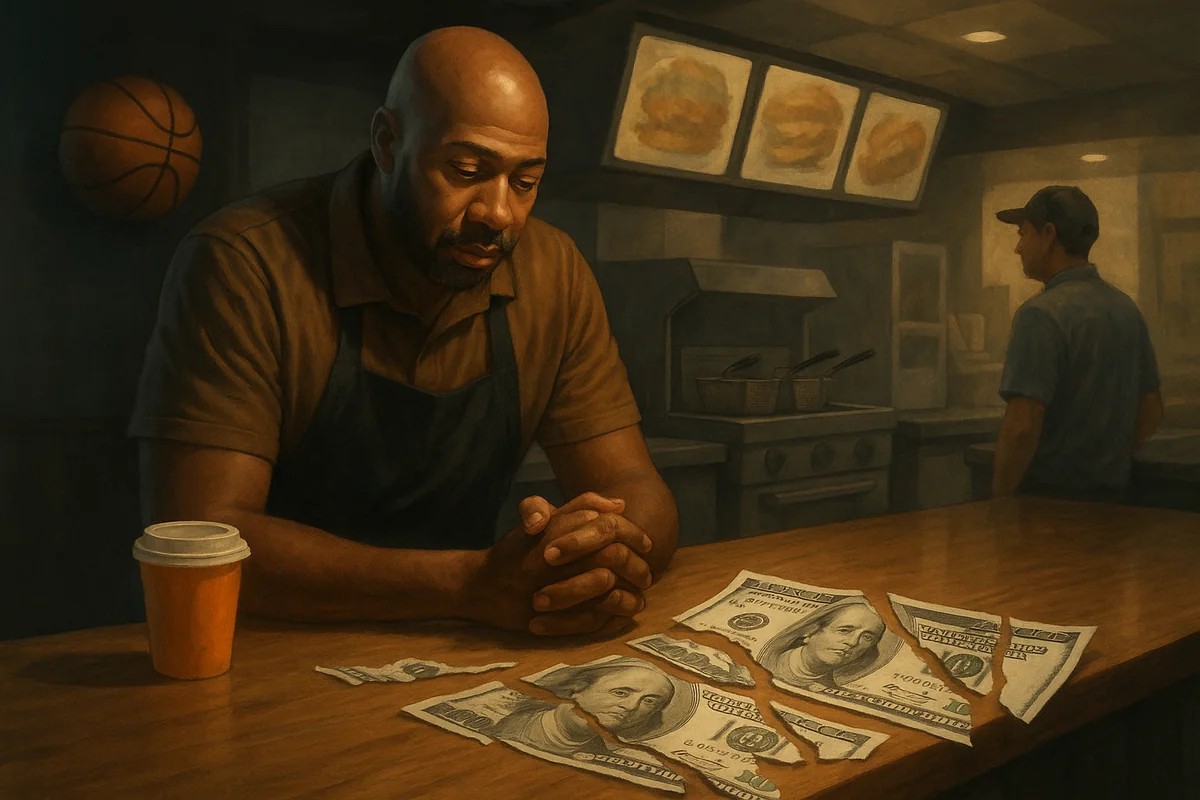
TL;DR: Former NBA All-Star Vin Baker lost approximately $100 million to alcohol addiction and financial mismanagement, leading him to start over as a Starbucks employee in 2015. His willingness to accept humble work became the foundation for his recovery and eventual return to professional basketball in a coaching role.
In 2015, Vin Baker—a four-time NBA All-Star who had earned more than $100 million during his playing career—began training to work behind the counter at a Starbucks near his Rhode Island home. The announcement drew widespread attention, not because of celebrity novelty, but because it represented a stark reversal: a player once among the league’s highest-paid had lost his entire fortune and was starting again in an entry-level service job.
From Elite Basketball to Financial Collapse
Baker played 13 seasons in the NBA from 1993 to 2006, representing the Milwaukee Bucks, Seattle SuperSonics, Boston Celtics, and other teams. He was selected to four All-Star games and represented Team USA in international competition. Over the course of his career, he signed contracts totaling approximately $100 million—a figure that, even accounting for taxes and agent fees, should have secured generational wealth.
Instead, Baker’s fortune disappeared. In public statements reported by Forbes in 2015, he acknowledged that alcohol addiction was the primary driver of his financial ruin. His struggles with drinking began during his playing years and escalated after retirement, impairing his judgment and contributing to a series of poor financial decisions. By the time he sought help, the money was gone.
The Decision to Start Over at Starbucks
Rather than retreating from public view or seeking a high-profile sinecure, Baker made an unconventional choice: he accepted a position training to work at a Starbucks owned by a family friend. Multiple outlets reported that the role was entry-level, requiring him to learn the register, prepare drinks, and serve customers—tasks far removed from the spotlight of professional sports.
Baker later explained that the job served a dual purpose. It provided structure and routine during early recovery, and it forced him to confront his circumstances without pretense. The humility required to take orders and clean counters, he said, was part of rebuilding self-discipline. The Starbucks position was not a PR stunt; it was a practical step toward sobriety and financial stability.
What the Public Reaction Revealed
The announcement prompted a mix of sympathy, curiosity, and judgment. Some observers praised Baker’s willingness to work an honest job; others saw the story as a cautionary tale about athletes and money. The coverage also highlighted a broader pattern: multiple reports noted that Baker’s situation was not unique among retired athletes, many of whom face financial distress within years of leaving professional sports.
Importantly, Baker did not frame his new role as defeat. In interviews, he emphasized that accepting the Starbucks job was an active choice—a decision to take responsibility rather than waiting for rescue. That distinction mattered: it signaled accountability and a commitment to change, rather than passive victimhood.
The Path From Barista to NBA Champion
Baker’s work at Starbucks did not last indefinitely. As he maintained sobriety and rebuilt his reputation, opportunities in basketball re-emerged. He eventually returned to the NBA in a coaching and player-development capacity. Recent coverage from June 2026 notes that Baker has since gotten his life on track and now shares his experience with younger players, offering advice on financial management and the dangers of addiction.
The arc from All-Star to barista to coach illustrates a key principle: recovery often requires accepting roles that feel beneath one’s former status. For Baker, the Starbucks counter was not a permanent destination but a necessary step—a place to practice discipline, humility, and consistency while the rest of his life stabilized.
Warning Signs and Transferable Lessons
Baker’s story offers several concrete takeaways for anyone managing sudden wealth, career transitions, or addiction recovery:
- High income does not equal financial literacy. Earning millions does not automatically confer the skills to manage, invest, or protect that money, especially under the influence of addiction.
- Addiction clouds judgment across all domains. Baker’s financial losses were inseparable from his alcohol use; the two problems reinforced each other.
- Accepting humble work can be a recovery tool. Structure, routine, and accountability—even in a low-wage job—can provide stability during early sobriety.
- Public honesty reduces shame and opens doors. By acknowledging his mistakes rather than hiding, Baker eventually regained trust and professional opportunities.
- Recovery is a process, not an event. Baker’s return to basketball took years and required sustained sobriety, not a single dramatic turnaround.
Frequently Asked Questions
Did Vin Baker actually work full shifts at Starbucks? Yes. According to Forbes reporting in 2015, Baker was training for and working at a Starbucks location in Rhode Island. The position was real employment, not a ceremonial role, and he performed standard barista duties while in recovery.
Is Vin Baker still involved with the NBA? Yes. As of June 2026, multiple sources confirm that Baker has returned to professional basketball in a coaching and mentorship capacity. He now speaks publicly about financial stewardship and addiction, using his experience to counsel current players.
Source note: This case study is based on publicly reported facts from Forbes, Yahoo Sports, The Sun, and other outlets covering Vin Baker’s career, financial losses, and recovery between 2015 and 2026. No private conversations, unpublished motives, or invented scenes appear in this account. Readers seeking financial or addiction-recovery guidance should consult qualified professionals; this article describes one individual’s documented experience, not a universal prescription.