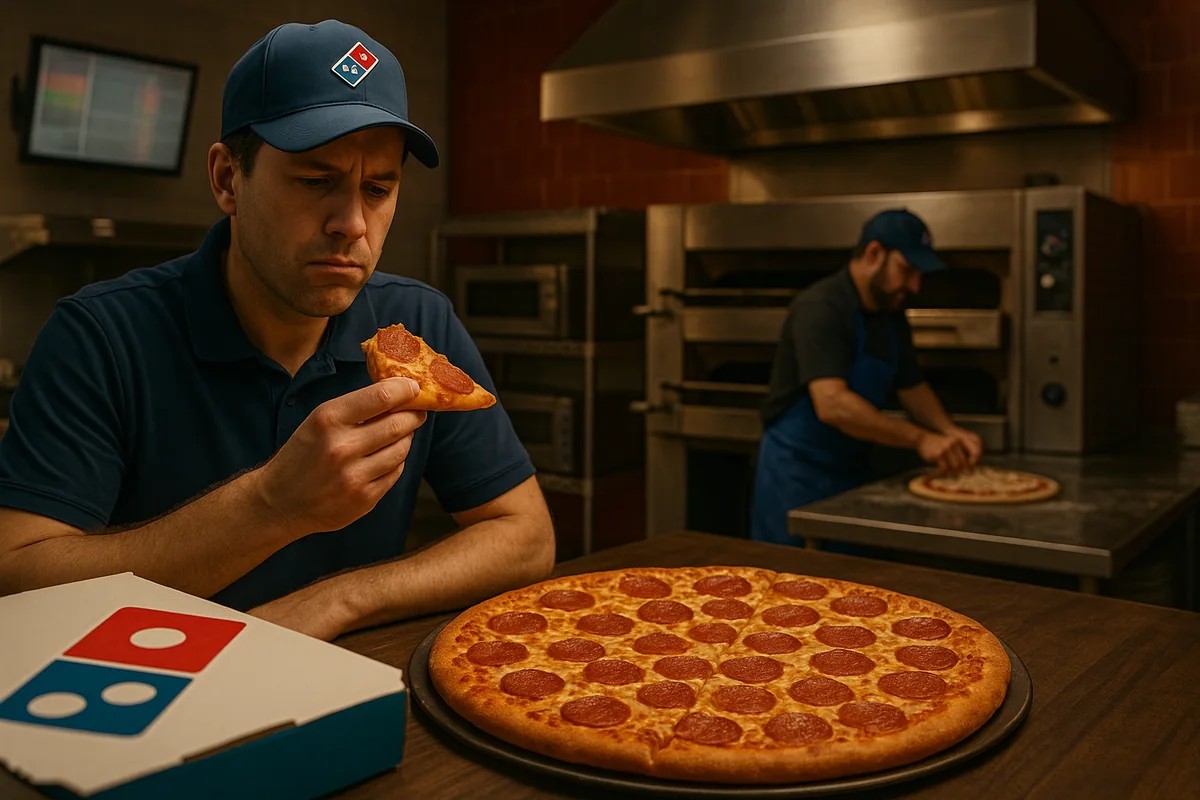
TL;DR: In 2009, Domino’s Pizza publicly acknowledged customer complaints that its pizza tasted like cardboard and launched a transparent campaign admitting the product was substandard. The company then reformulated its core recipe and turned brutal honesty into a business turnaround, demonstrating that addressing specific customer criticism can rebuild trust more effectively than defensive marketing.
By late 2009, Domino’s Pizza faced a harsh reality: focus groups and online reviews consistently described its product as tasteless, with crusts compared to cardboard. Rather than dismissing the feedback or launching a conventional advertising campaign to rebrand perception, the company made an unusual choice. It decided to admit publicly that critics were right and that the pizza needed fundamental change.
The Crisis: Customers Called the Pizza the Worst They’d Ever Eaten
Throughout 2009, Domino’s collected customer feedback through surveys, focus groups, and social media monitoring. The results were unambiguous. Customers described the pizza as having no flavor, a crust that tasted like cardboard, and sauce that lacked authenticity. Internal research confirmed that taste, not delivery speed or price, had become the company’s core problem. Market share had stagnated, and the brand ranked poorly in quality perception compared to competitors. The company’s decades-old recipe, optimized for fast production and delivery rather than flavor, had fallen badly out of step with evolving consumer expectations for restaurant-quality ingredients and taste.
Leadership faced a choice: defend the existing product with better marketing spin, or acknowledge the gap between what customers wanted and what Domino’s delivered. The decision carried significant risk—admitting product failure in public advertising was virtually unprecedented in the fast-food industry.
The Pivot: A Campaign Built on Brutal Honesty
In December 2009, Domino’s launched what became known as the Pizza Turnaround campaign. Television commercials featured real footage of company executives reading actual customer criticisms aloud, including phrases like “worst pizza I ever had” and “totally devoid of flavor.” The ads did not deflect or spin; they showed Domino’s employees visibly uncomfortable as they confronted the negative feedback. The company then announced it had spent months reformulating its pizza from the crust up, changing the sauce recipe, adding a garlic-butter blend to the crust, and sourcing different cheeses.
In early 2010, Domino’s relaunched its pizza with the new recipe and amplified the campaign by inviting customers to compare the old product with the new. The transparency extended to a live Twitter feed displayed in New York’s Times Square, showing unfiltered customer reactions—both positive and negative—in real time. This willingness to expose the company to continued criticism underscored the authenticity of the turnaround effort.
The Outcome: Sales Rebounded and Market Position Shifted
The results validated the gamble. By the end of the first quarter of 2010, Domino’s reported significant sales increases compared to the prior year. Same-store sales, a key retail metric, turned positive after quarters of decline. The stock price, which had languished, began a multi-year climb. Consumer perception scores for pizza quality improved markedly in independent surveys. The campaign earned industry recognition, but more importantly, it rebuilt customer trust in a way that conventional advertising had failed to achieve.
Beyond the immediate sales impact, the turnaround repositioned Domino’s as a company willing to listen and respond to criticism. This cultural shift later enabled the company to invest in digital ordering technology and customer-facing innovation, building on the credibility earned through the 2009–2010 reset.
Why the Honesty Strategy Worked
Several factors explain why public admission succeeded where deflection might have failed. First, the criticism Domino’s acknowledged was already widespread and visible in online reviews and social media; pretending the problem did not exist would have lacked credibility. Second, the company paired the admission with concrete product changes, not just messaging. Customers could taste the difference, which validated the company’s claims of reform. Third, the campaign’s transparency—particularly the live, unfiltered feedback in Times Square—demonstrated accountability rather than carefully controlled spin.
The approach also tapped into a broader shift in consumer expectations. By 2009, social media had made it difficult for brands to control their narratives. Customers expected brands to engage authentically rather than broadcast polished messages. Domino’s recognized that owning the problem publicly could be less damaging than allowing critics to define the narrative without response.
Lessons for Organizations Facing Product Criticism
The Domino’s turnaround offers practical guidance for businesses dealing with quality or reputation challenges:
- Audit feedback honestly: Collect and analyze customer complaints without filtering out the harshest criticism; patterns in negative feedback often identify the most urgent product gaps.
- Test whether the problem is real: Verify through measurable data—taste tests, quality benchmarks, competitive comparisons—that customer complaints reflect genuine product shortcomings rather than perception issues alone.
- Pair admission with action: Public acknowledgment of a problem without tangible change risks deepening mistrust; ensure product improvements are ready before launching a transparency campaign.
- Show, don’t just tell: Domino’s used video of real employees and unscripted customer feedback rather than scripted testimonials, which increased the campaign’s credibility.
- Accept ongoing scrutiny: The Times Square Twitter feed demonstrated willingness to be judged in real time; this level of transparency signals that a company is confident in its changes.
Organizations should note that this approach carries risk. If the reformulated product had failed to deliver noticeable improvement, the campaign could have amplified the company’s vulnerabilities. The strategy depends on leadership’s commitment to substantive change, not just rhetorical repositioning.
Frequently Asked Questions
Did Domino’s face backlash for admitting its pizza was poor quality? Initial reactions were mixed; some observers questioned whether highlighting past failures would drive customers away. However, the combination of honesty and demonstrable product improvement ultimately strengthened customer relationships. The campaign succeeded because it addressed a problem customers already recognized, rather than introducing a new negative perception.
What specific recipe changes did Domino’s make during the turnaround? The company reformulated its crust, adding garlic and a butter-parsley blend, and changed its sauce to include different herbs and a richer tomato base. It also upgraded cheese sourcing and adjusted baking processes. These changes were tested extensively in focus groups before the national rollout in early 2010, ensuring that the new product met higher taste standards.
Source note: This case study is based on public reporting by Forbes, CBS News, and academic case analysis, along with the company’s documented advertising campaign in 2009–2010. All events described occurred between 2009 and 2010; this article synthesizes the historical record as of 2026.